
YSU graduate student gains hands-on research computing experience through OSG School 2026
Student Spotlight
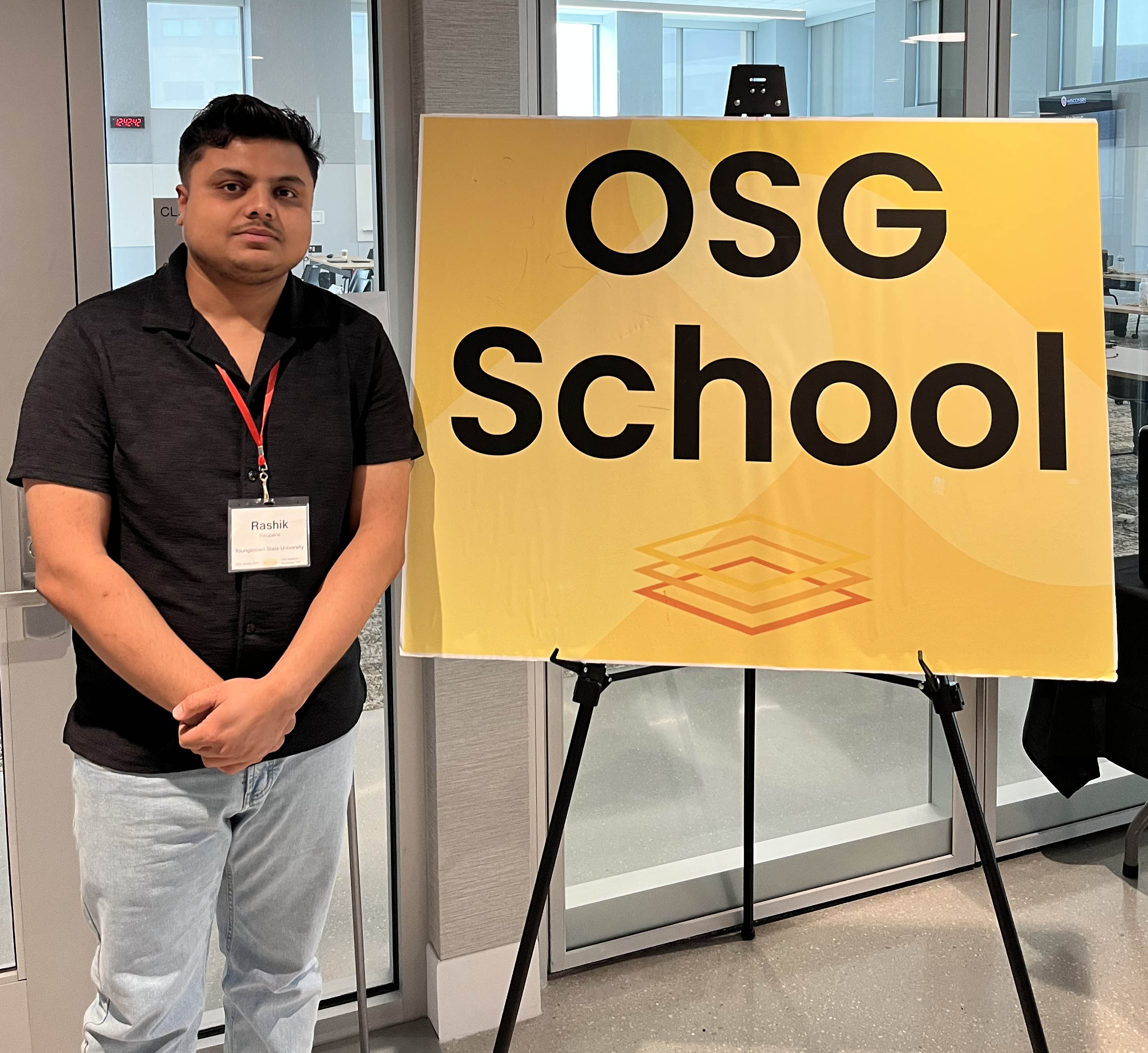
Rashik Neupane, a graduate student in the Master of Computing and Information Systems program at Youngstown State University, participated in OSG School 2026, a training program focused on High-Throughput Computing HTC and large-scale research computing. The school brought together students, researchers, faculty and computing professionals from different institutions and fields to learn how distributed computing resources can be used to address computational challenges in scientific research.
OSG School is a weeklong event organized at the University of Wisconsin-Madison that provides participants with practical knowledge and hands-on experience in high-throughput computing using OSPool. HTC allows researchers to efficiently run large numbers of independent computational tasks and is particularly useful for research involving large datasets and computationally intensive workflows. During the program, participants learned about the OSG ecosystem, OSPool, job execution, software environments, data management and troubleshooting techniques.
Neupane received full funding for travel and lodging to attend OSG School 2026. The opportunity allowed him to participate in the program and gain hands-on experience without bearing travel and accommodation costs. Support from the program and its affiliated organizations made it possible for him to participate fully in the weeklong program.
Throughout the school, Neupane participated in lectures and hands-on workshops covering HTC and the effective use of OSPool. The sessions provided practical experience with running computational jobs, working with software environments, managing data and troubleshooting issues. These activities helped participants apply HTC to their real-world research problems.
The event was particularly relevant to Neupane’s research, titled “Big Data Analytics of Bitcoin Transactions in the Decentralized Network.” His research involves analyzing large amounts of Bitcoin blockchain transaction data, which can require significant computational resources when processing and analyzing large datasets. Through OSG School, he gained a better understanding of how HTC resources can be used to run independent computational tasks efficiently and support large-scale data analysis.
In addition to the technical training, Neupane had the opportunity to interact with researchers, students, professors and computing professionals from different institutions and research areas. These interactions helped him learn about other researchers’ experiences, discuss computational challenges and explore how HTC can be applied across different fields. He also had the opportunity to visit a data center at the University of Wisconsin-Madison and learn about the infrastructure involved in operating and managing the facility.
The experience strengthened Neupane’s research computing skills and provided practical knowledge that he can apply to his ongoing research. The training also expanded his understanding of scalable computing infrastructure and gave him experience that can contribute to his future academic and professional career in computing, big data analytics and blockchain research.
“OSG School was a valuable learning experience that gave me a better understanding of how High-Throughput Computing can address computational challenges in research,” Neupane said. “The hands-on experience with OSPool and the opportunity to learn from researchers and professionals from different fields will be especially useful for my research on large-scale Bitcoin transaction data.”
Neupane expressed his appreciation to OSG School, the Center for High Throughput Computing CHTC, the University of Wisconsin-Madison and the National Science Foundation NSF for supporting the program. He also thanked Feng Yu, professor of computer science, information and engineering technology at Youngstown State University, for encouraging, guiding and supporting him throughout the process of applying for and participating in OSG School 2026.