
Bliss Hall TV production studio receives $150,000 upgrade
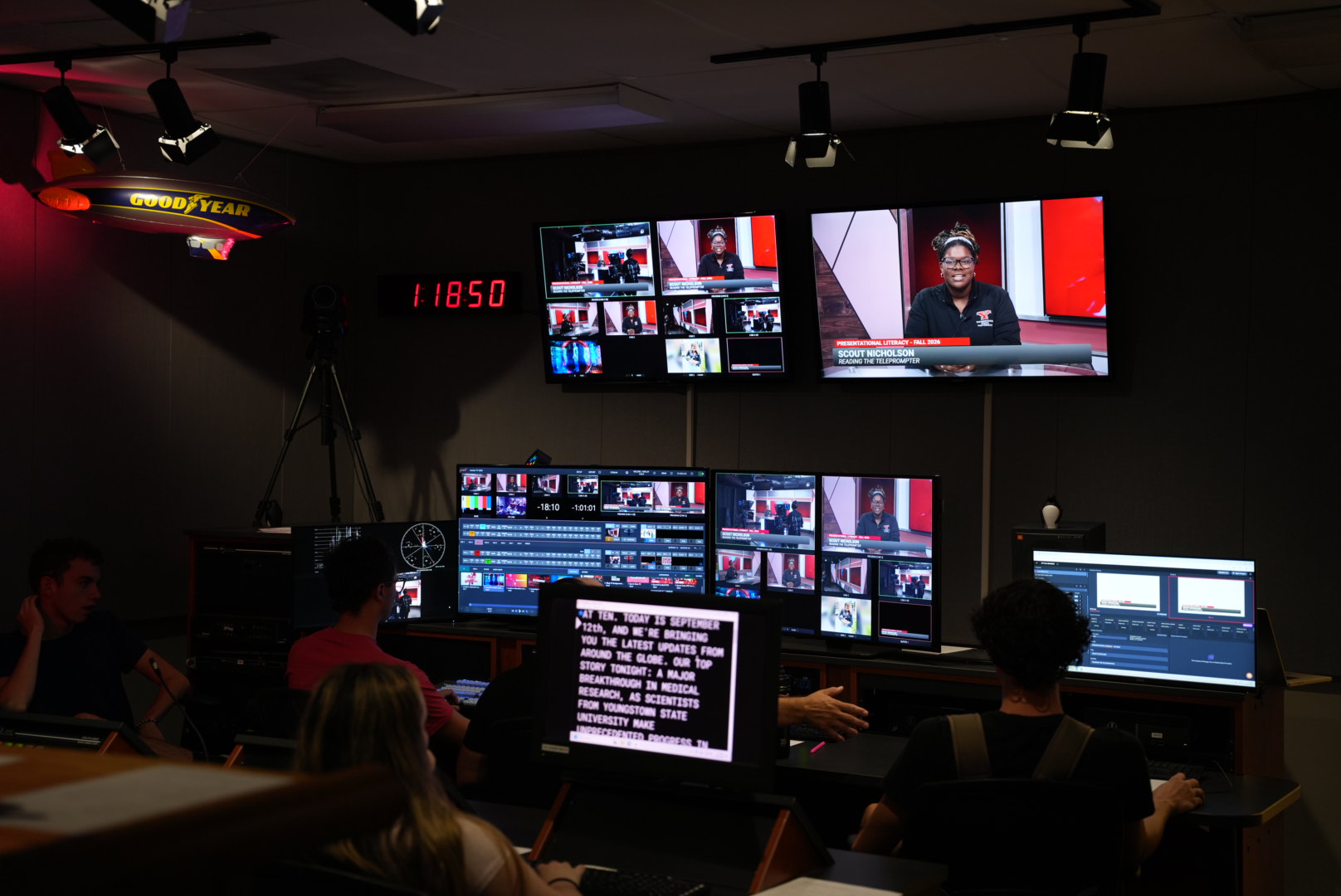
The TV production studio in Youngstown State University’s Bliss Hall has received approximately $150,000 in upgrades designed to give multimedia communication and journalism students hands-on experience with current production technology.
Completed over the summer, the project includes new cameras, a wireless communication system, teleprompters with program monitors, accent lighting and a redesigned studio set that can be configured for multiple looks. The set also includes a large flatscreen monitor that can display images and video during productions.
The upgraded studio serves as both a classroom and production space for student shows, individual projects and class assignments. After years of smaller updates, the department determined that rapid changes in audio, video and software technology called for a comprehensive studio makeover.
“We want our students to have the most up-to-date equipment,” said Charlie Howell, dean of the Beeghly College of Liberal Arts, Social Sciences and Education. “They need to practice with the technology they’ll be using in internships and on their first job. I’m thrilled at the proactive approach the department is taking to keep current with developments in the field.”
Mary Beth Earnheardt, chair and professor of journalism, said the improvements connect students’ coursework with the expectations of professional media workplaces.
“Our courses and curricula have direct professional connections,” Earnheardt said. “The studio is a classroom, so the better the equipment, the better the learning.”
Dan McCormick, studio coordinator and broadcast engineer, designed and installed the upgrades with flexibility in mind. He prioritized long-lasting essentials, such as tripods and pedestals, while selecting more cost-effective options for technology likely to evolve quickly.
“The challenge is making the space different things, very quickly,” McCormick said. “Flexibility of our facilities teaches our students to be ready for anything the industry may throw at them.”
The new wireless communication system gives crew members greater mobility and enables instructors to communicate with students throughout the production. The teleprompters’ program monitor – often called confidence monitors – also allow on-camera talent to see when they are in the shot.
“This allows them to know if they are covered during a production and gives them the confidence to perform better,” McCormick said.
McCormick said less-visible features, including cable management equipment and modular monitor arms, will improve behind-the-scenes operations. These updates will help make the studio more efficient for students and instructors during productions.
The updated set’s large monitor is already expanding creative possibilities for students. “Jambar Sports Extra” uses it as an informational wall, and McCormick said students are beginning to consider how it can support other productions.
The project continues the department’s efforts to prepare students for careers in media and content creation before graduation.
“The improvements to the studio are part of a continuing tradition of helping our students walk from our classroom and into the Youngstown media market,” Earnheardt said.