
YSU graduate student develops web accessibility tool for capstone project
STUDENT SPOTLIGHT
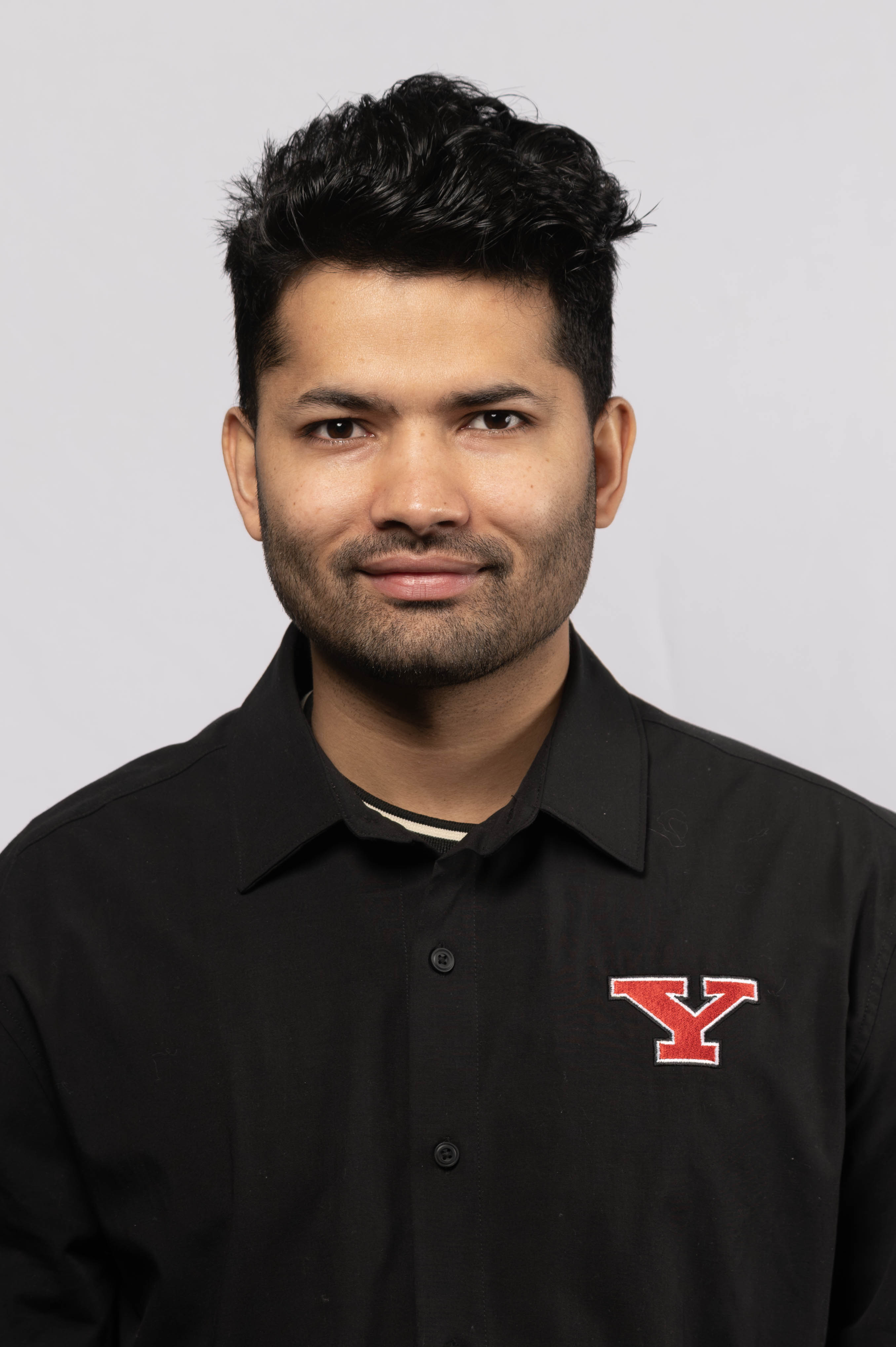
Youngstown State University graduate student Dil Rawat is using his capstone project in the Master of Computing and Information Systems program to do his part in tackling a growing national need: digital accessibility.
Rawat, who has worked as a graduate assistant for the web team in the Office of Marketing and Communications and is currently working on his final capstone research project, built an online tool that scans websites for accessibility violations based on the Web Content Accessibility Guidelines 2.1. His web accessibility scanner, titled A11yGuidance, was inspired by both his professional background and a 2024 federal mandate requiring state and local government-funded websites to meet ADA accessibility standards.
“When I started working as a student developer, I didn’t know much about accessibility,” Rawat said. “Over time, I realized how many websites aren’t usable for people who rely on assistive technologies. That’s when I knew I wanted to build something that could help.”
The tool allows users to enter any website URL and receive a detailed report outlining accessibility issues, explanations of why they matter and guidance — including copyable code snippets — on how to fix them.
Rawat said he was motivated not only by federal requirements, but by the reality that one in four U.S. adults has a disability. According to the 2025 WebAIM Million Report, WCAG 2.1 violations were detected on 94.8% of home pages.
“Everything is online now...education, health, legal information,” he said. “When a website isn’t accessible, it means someone is being left out. I wanted to help close that gap.”
Rawat credits much of his preparedness to his coursework, including server‑side programming and web development classes, as well as the support of faculty and YSU’s web team. He also meets weekly with his faculty advisor, Zack While, whose background in human‑computer interaction has helped guide Rawat in shaping the project’s design and usability.
“He always gives me a new way to look at things,” Rawat said. “It’s been really helpful having his perspective.”
Outside the classroom, Rawat points to HackYSU as a major influence in his professional development. He had previously built full‑stack projects during the event and says the mentorship and hands‑on environment strengthened his confidence to pursue a large‑scale tool like this one.
His project has already gained attention across campus and the community. Rawat presented versions of his work at LAHSS‑Con, the Graduate Research and Creative Showcase — where he was one of only five students accepted — and plans to present at this year’s HackYSU.
Rawat recently met with Derrick McDowell, mayor of Youngstown, sharing accessibility reports for the City of Youngstown, Mahoning County Public Health and WRTA websites. Beyond government entities, the Oak Hill Collaborative was inspired by his presentation, encouraging him to reach out to other nonprofits who might find A11yGuidance helpful in their web accessibility journey.
“They were really open to learning more,” Rawat said. “Accessibility is becoming a priority everywhere.”
Rawat hopes the tool will directly support organizations and institutions that publish public information and indirectly support millions of people with disabilities who rely on accessible digital content. As he looks ahead to graduation, Rawat says the project has already shaped his future as a developer.
“Now, whenever I look at a website, the first thing I notice is the color contrast or whether the text is readable,” he said. “In any job I take in the future, accessibility will always be one of the first things I think about.”
Rawat plans to continue upkeep of the tool after graduation, as web content is frequently changing and all new digital content from April forward must remain compliant throughout its life cycle. While his research may have begun at YSU, his goal is to help the thousands of public entities across the country that are racing to meet the new federal guidelines.
His advice to other students preparing for capstone work? Start early, ask questions and lean on the resources around you.
“Don’t be shy about talking to professors,” he said. “Hackathons, competitions, mentors...they all help. Even if you don’t know where to begin, just start. You’ll gain experience that will take you far.”